
Why teams use Finance and Loan PDF Automation
- Map borrower and underwriting fields to lending schema columns.
- Reduce rekeying on loan applications and disclosure packets.
- Support repeat workflows across product lines and document versions.
Industry workflow page
Automate loan applications, financial disclosures, and compliance documents by mapping PDF fields to structured lending and underwriting data.
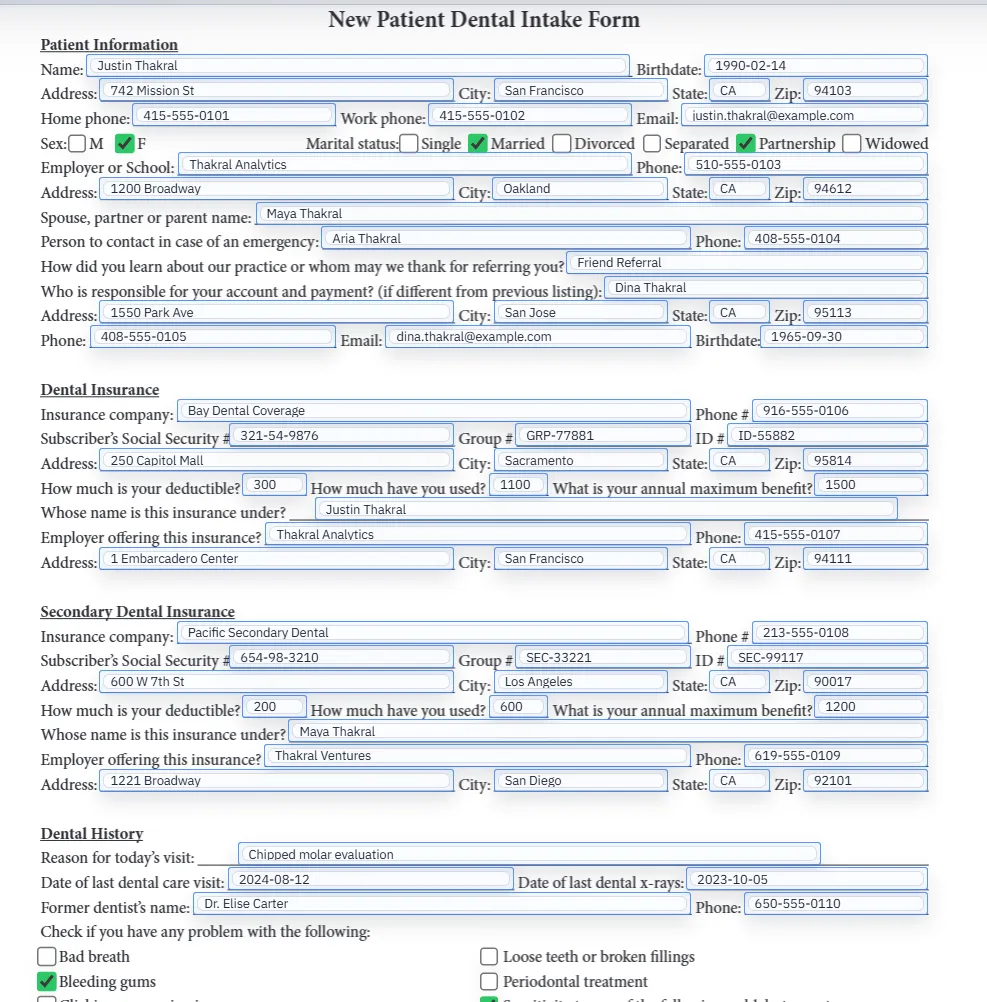
Finance and lending teams often handle packets where the same borrower, applicant, or client details need to appear across applications, disclosures, supporting forms, and compliance documents. The data already exists in underwriting or operational systems, but the last mile is still a PDF that someone has to prepare accurately.
That creates a repeat-typing problem with higher stakes than many other workflows. Even small errors can create rework, borrower friction, or compliance headaches. A reusable template workflow is valuable because it reduces both effort and avoidable inconsistency.
Once a loan or finance PDF is converted into a mapped template, borrower fields, dates, and repeated identifiers can be driven from structured records instead of manual re-entry. That is useful not just for the main application, but for disclosures and supporting documents that reuse the same data under different layouts.
The biggest gains often come from establishing one dependable mapping pattern and then extending it to adjacent documents. That keeps the process coherent as packet complexity grows.
Start with the fields that create the most downstream risk: borrower names, dates, identifiers, disclosure-specific values, and checkbox-like attestations. Validate those against representative records before the template is adopted broadly.
For finance workflows, slower initial QA is usually cheaper than discovering a weak template only after it has been used repeatedly. The template needs to be trusted before it can actually save time.
Loan and finance teams rarely stop at one PDF. The same borrower information usually has to move through disclosures, supporting forms, and later packet revisions that may vary by product line or lender. That is why a reusable template strategy matters here more than a one-time form demo. Each recurring document needs a clear owner, stable field naming, and a predictable place in the broader packet.
When those templates are versioned deliberately, teams can expand from one dependable application or disclosure workflow into the rest of the packet without recreating the same mapping logic every month. That is what keeps finance automation useful under real operating pressure rather than just attractive in a demo.
A useful finance and loan pdf automation test starts with one document your team already recognizes, not a perfect demo PDF. Open the existing file, review detection, rename ambiguous fields, confirm checkbox and radio behavior, and save the template only after the field list matches the way the document is used in practice.
Then fill one representative record end to end. Include long names, blank optional values, dates, yes/no choices, and any calculated or scannable fields the page depends on. That single controlled run exposes most template issues before they become repeated output problems.
Search & Fill is the right first path when an operator should pick a record and inspect the result before export. It works with row data from CSV, XLSX, JSON, or stored respondent records. SQL and TXT files should be treated as schema-only mapping inputs; database-backed production workflows should query the database elsewhere and send JSON through API Fill.
Output mode matters too. Editable PDFs are useful when someone will continue working in live fields. Flat PDFs are safer when the completed record goes to customers, employees, agencies, signers, or archive systems because the visible values are baked into the page instead of depending on the recipient PDF viewer.
The finance and loan pdf automation rollout is ready to reuse when a teammate can clear the document, rerun the same source record, and produce the same visible PDF without remembering hidden cleanup steps. If the result depends on one person knowing which field to fix manually, the template still needs review before it belongs in a repeat workflow.
Need deeper technical details about finance and loan pdf automation? Use the Rename + Mapping docs and Search & Fill docs to validate exact behavior.
Yes. Loan application templates can be mapped to structured data and reused for repetitive fill tasks.
Yes. Disclosure and related finance forms can be filled from mapped record fields.
Yes. Mapped template workflows can support recurring compliance document preparation.
These walkthroughs and comparison posts cover the same workflow cluster from an operator point of view, which helps you move from a route summary into a more specific implementation path.
Use these docs pages to verify the exact DullyPDF behavior behind finance and loan pdf automation before you ship it as a repeat workflow.
These adjacent routes cover neighboring document workflows and team use cases that usually get evaluated alongside finance and loan pdf automation.