Commercial workflow page

Create a Total Field in a Fillable PDF

Build subtotal, tax, discount, shipping, deposit, balance, and grand-total fields into reusable fillable PDF templates.

Workflow examples for Fillable PDF Total Field

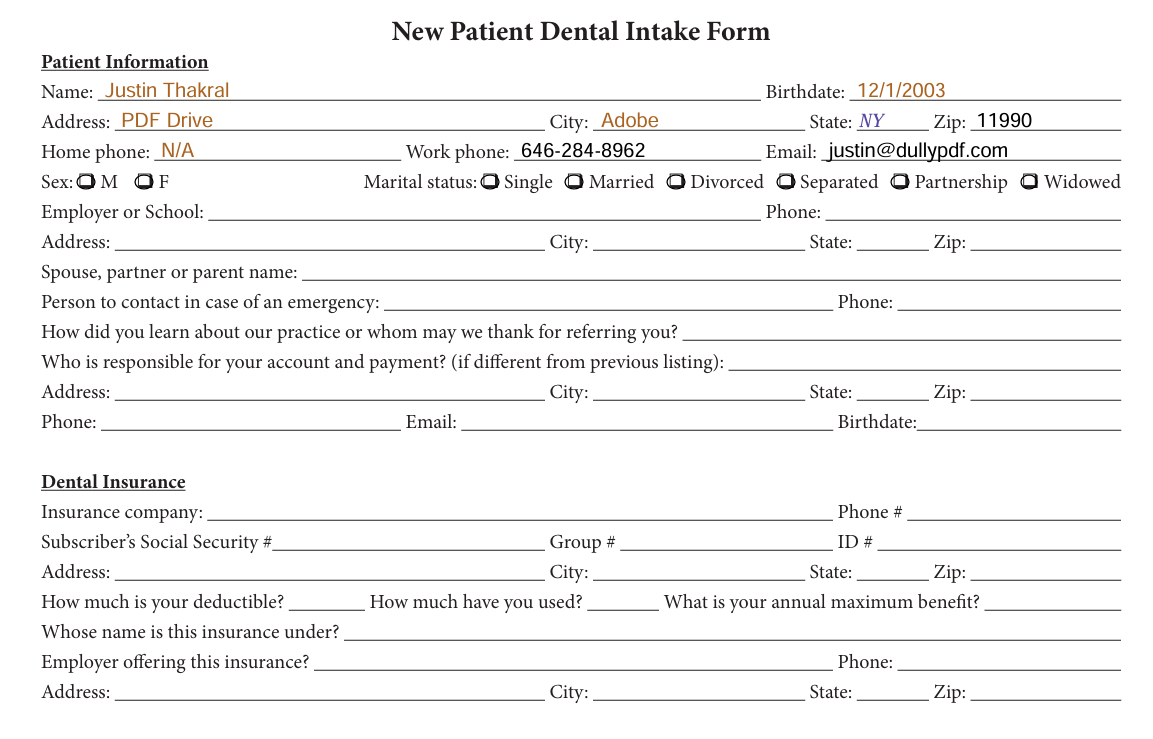
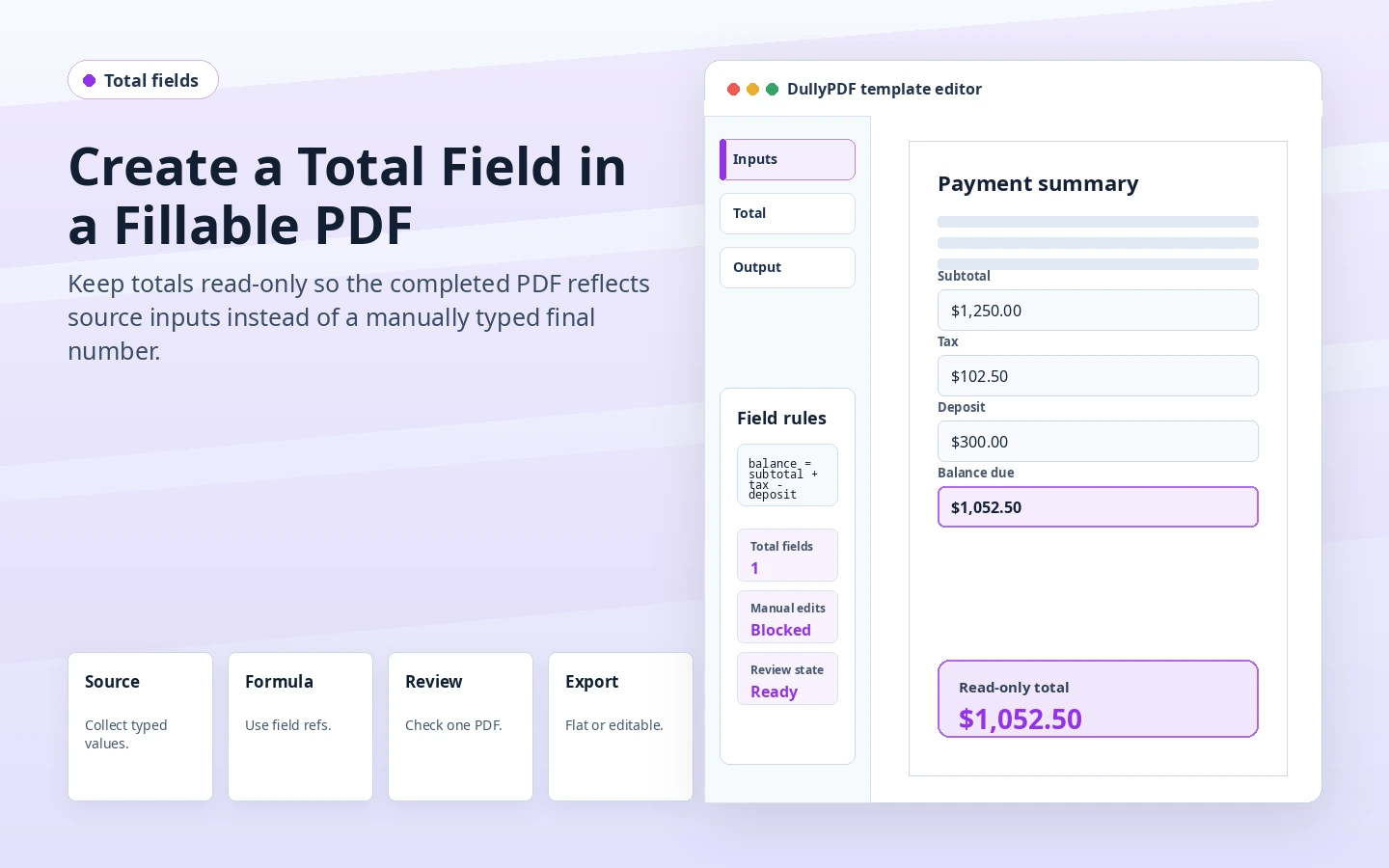
DullyPDF total-field preview showing source payment fields connected to a read-only balance due output.
A total field should usually be read-only so the final number is derived from the source inputs instead of typed manually.
Flat PDF output showing completed field values rendered into the final document.
For customer-facing totals and final records, flat output avoids depending on the recipient viewer to rerun calculations.

The total field is usually a workflow control, not a cosmetic field

A total field is important because it represents a value the operator should not retype. The more often a form repeats, the more likely manual totals become a source of mistakes. A reusable template should define the relationship once and let the output compute from source inputs.

That is true for invoices, order forms, estimates, reimbursement sheets, fee worksheets, and internal approval forms. The printed result may look like one number, but the workflow value is the repeatable rule behind it.

Common total-field patterns

Most total fields are built from a small set of patterns. A line total multiplies quantity by unit price. A subtotal combines line totals. A grand total adds tax and shipping or subtracts discounts. A balance due subtracts deposit or amount paid from the total.

Those patterns are simple enough for a safe formula model, but they still need careful field naming. A formula is easier to verify when the inputs are named like quantity, unit_price, subtotal, tax, deposit, and balance_due instead of Text1 or Field_17.

  • Line total: quantity times unit price.
  • Grand total: subtotal plus tax plus shipping minus discount.
  • Balance due: total minus deposit or amount paid.
  • Fee total: base fee plus add-ons minus credits.

Why the total should usually be read-only

If a total can be typed manually, the template no longer guarantees that the value matches the source inputs. DullyPDF calculated outputs are read-only so the total remains derived from the formula. That is the safer default for repeat operations and customer-facing records.

If a business truly needs a manual adjustment, model it as an input field. For example, use discount, adjustment, or override_amount as source fields, then let the total calculate from those explicit inputs.

What to test before publishing a total field

Test one ordinary record, one record with blank optional values, and one record with a discount or deposit. If division is involved, test zero and blank input behavior. Those cases expose most total-field mistakes before the template is used by respondents or API callers.

Also inspect the final output mode. Editable PDFs are useful when live fields must remain editable. Flat PDFs are better when the completed total is the final number that should appear consistently in every viewer.

Validate the fillable pdf total field workflow with one real record

A useful fillable pdf total field test starts with one document your team already recognizes, not a perfect demo PDF. Open the existing file, review detection, rename ambiguous fields, confirm checkbox and radio behavior, and save the template only after the field list matches the way the document is used in practice.

Then fill one representative record end to end. Include long names, blank optional values, dates, yes/no choices, and any calculated or scannable fields the page depends on. That single controlled run exposes most template issues before they become repeated output problems.

Choose data and output paths for fillable pdf total field

Search & Fill is the right first path when an operator should pick a record and inspect the result before export. It works with row data from CSV, XLSX, JSON, or stored respondent records. SQL and TXT files should be treated as schema-only mapping inputs; database-backed production workflows should query the database elsewhere and send JSON through API Fill.

Output mode matters too. Editable PDFs are useful when someone will continue working in live fields. Flat PDFs are safer when the completed record goes to customers, employees, agencies, signers, or archive systems because the visible values are baked into the page instead of depending on the recipient PDF viewer.

Production checklist for fillable pdf total field

The fillable pdf total field workflow is ready to reuse when a teammate can clear the document, rerun the same source record, and produce the same visible PDF without remembering hidden cleanup steps. If the result depends on one person knowing which field to fix manually, the template still needs review before it belongs in a repeat workflow.

  • The saved template uses stable field names and reviewed field types.
  • Source headers or API keys match the template schema without ambiguous duplicates.
  • Checkbox, radio, calculated, image, barcode, and signature fields have been tested if the workflow uses them.
  • At least one flat output and one editable output have been opened in the PDF viewers recipients are likely to use.

Why teams use Fillable PDF Total Field

  • Model common totals such as subtotal, tax, discount, shipping, amount paid, and balance due.
  • Keep totals read-only so final values come from the formula instead of manual typing.
  • Reuse the same total logic across Search & Fill, Fill By Link, API Fill, downloads, and signing.

Implementation signals for Fillable PDF Total Field

  • DullyPDF calculates outputs from number inputs and formula dependencies before PDF materialization.
  • Flat exports are viewer-stable for completed totals sent to customers or external recipients.
  • Editable exports preserve current values and can include Acrobat-compatible calculation actions.

Need deeper technical details about fillable pdf total field? Use the Rename + Mapping docs and Search & Fill docs to validate exact behavior.

Frequently asked questions about Fillable PDF Total Field

Can I create a subtotal or grand total in a fillable PDF?

Yes. DullyPDF can create read-only calculated outputs from source number inputs such as line totals, tax, shipping, discounts, and deposits.

Should a PDF total field be editable?

Usually no. Keep the total read-only and model any manual adjustment as a separate input so the final total still comes from the formula.

Can a total field work with Fill By Link responses?

Yes. Respondents provide source values, and DullyPDF computes the total when the PDF is generated.

What output mode is best for completed totals?

Flat PDF output is best for final records because the total is baked into page content instead of relying on live recalculation in the recipient viewer.

Docs for Fillable PDF Total Field

Use these docs pages to verify the exact DullyPDF behavior behind fillable pdf total field before you ship it as a repeat workflow.

Related routes for Fillable PDF Total Field

These adjacent workflow pages cover nearby search intents teams compare while evaluating fillable pdf total field.