Commercial workflow page

Flat vs Editable PDF Output for Fillable Forms

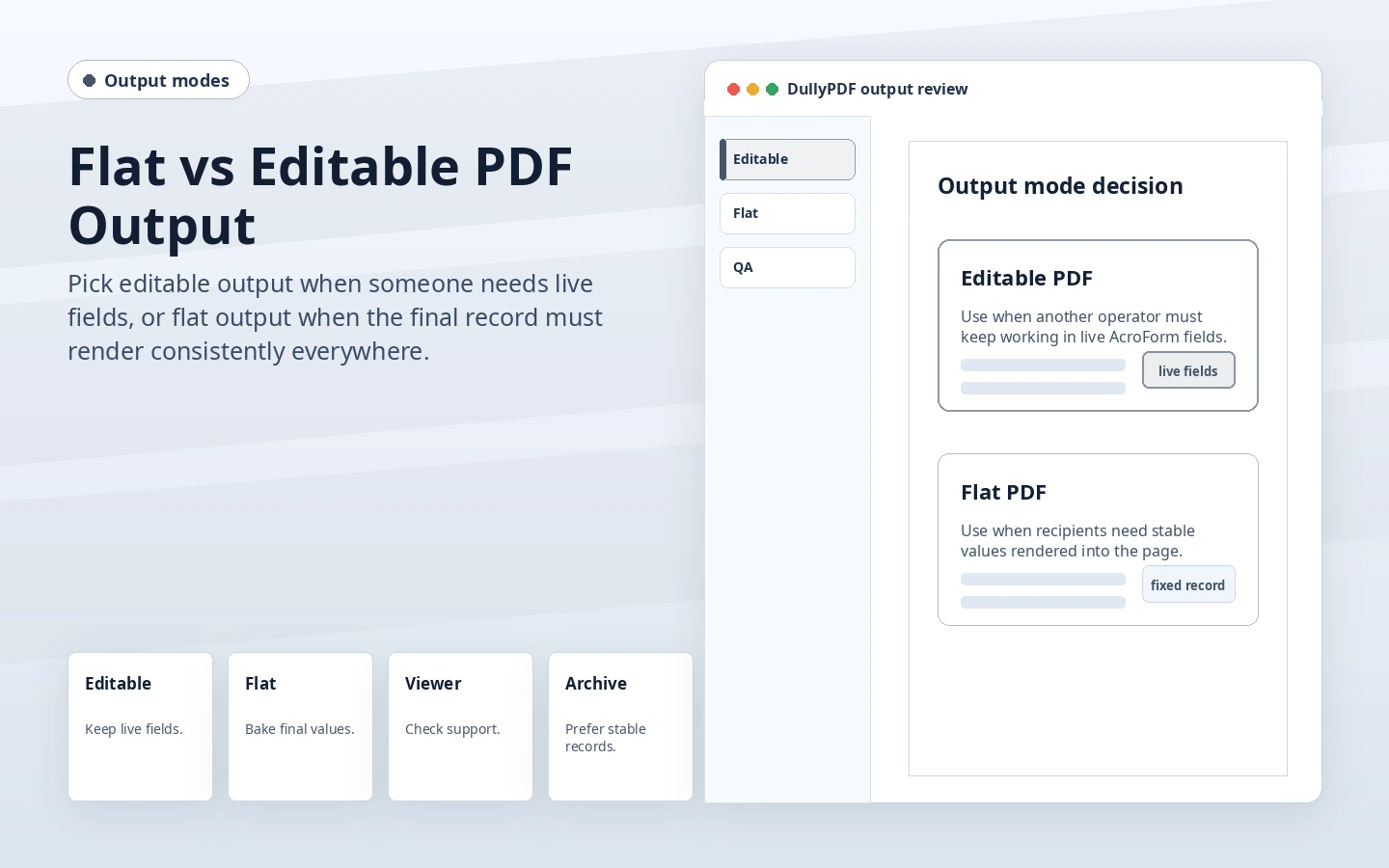
Choose editable PDFs when live fields must remain available and flat PDFs when final records need stable appearance across browsers, phones, and email previews.

Workflow examples for Flat vs Editable PDF

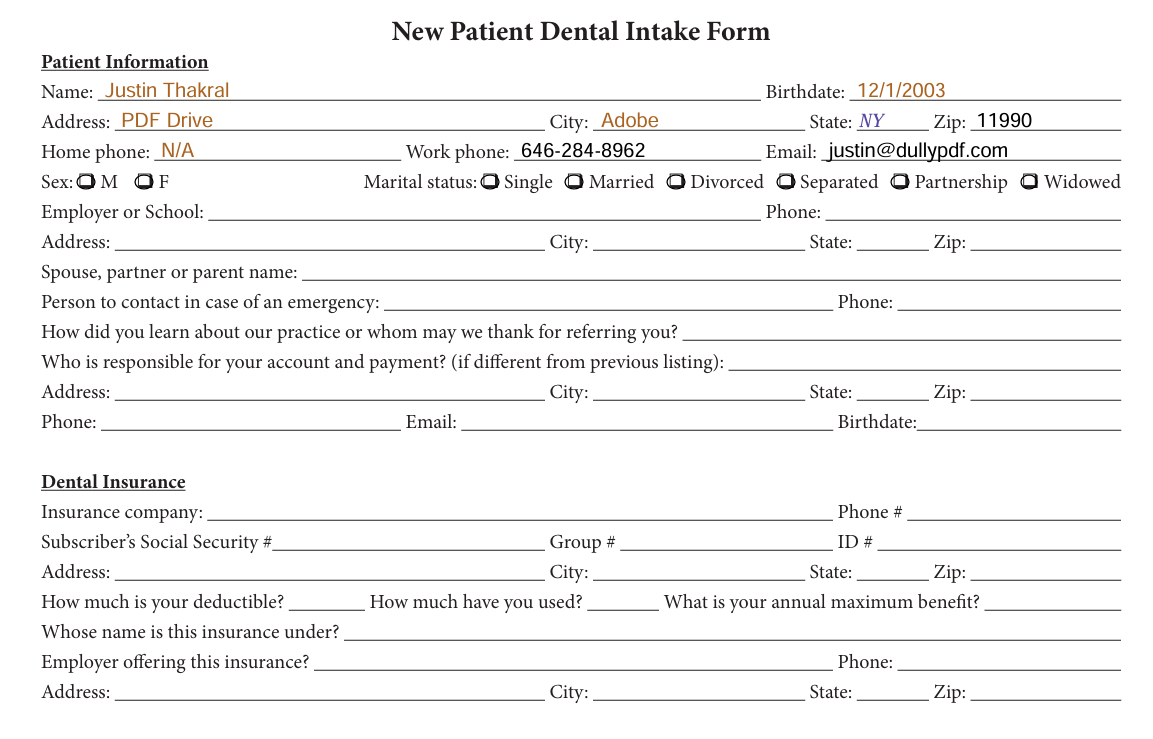
DullyPDF flat versus editable PDF preview comparing live AcroForm fields with stable rendered output.
Editable PDFs are useful when another person must keep working inside live fields in a compatible viewer.
Flat PDF output with field values rendered into page content.
Flat PDFs are usually safer for final records because the values no longer depend on live field rendering.

Editable PDFs preserve live field behavior

Editable PDFs are useful when the next person needs to keep typing into fields, changing checkbox selections, or continuing the form workflow in a compatible viewer. The values remain attached to AcroForm widgets rather than being drawn directly into the page.

That flexibility has a tradeoff. Different PDF viewers handle field appearances, scripts, active field states, and mobile previews differently. Editable output is best when the viewer and next step are known.

Flat PDFs are better for final records

A flat PDF draws the completed values into the page content. That makes the output more stable for customers, respondents, signers, archives, email previews, and mobile devices because the file no longer depends on live widget rendering.

If nobody needs to keep editing the fields, flat output is usually the safer final delivery mode. It turns the completed form into a record instead of another draft.

Common decision points

Use editable output for internal drafts, Acrobat-first workflows, and templates that still need field-level review. Use flat output for signed source records, respondent receipts, customer copies, invoices, approvals, and archive-ready PDFs.

The right answer can change during one workflow. A team might use editable output during internal review and flat output once the document is ready to send.

Why viewer compatibility drives the decision

Many users discover the flat/editable difference only after a recipient says the values look wrong or missing. That is often a viewer issue rather than a fill issue.

DullyPDF pages should be direct about that tradeoff. Editable fields are useful, but final records should not depend on every recipient having the same PDF viewer behavior.

Validate the flat vs editable pdf workflow with one real record

A useful flat vs editable pdf test starts with one document your team already recognizes, not a perfect demo PDF. Open the existing file, review detection, rename ambiguous fields, confirm checkbox and radio behavior, and save the template only after the field list matches the way the document is used in practice.

Then fill one representative record end to end. Include long names, blank optional values, dates, yes/no choices, and any calculated or scannable fields the page depends on. That single controlled run exposes most template issues before they become repeated output problems.

Choose data and output paths for flat vs editable pdf

Search & Fill is the right first path when an operator should pick a record and inspect the result before export. It works with row data from CSV, XLSX, JSON, or stored respondent records. SQL and TXT files should be treated as schema-only mapping inputs; database-backed production workflows should query the database elsewhere and send JSON through API Fill.

Output mode matters too. Editable PDFs are useful when someone will continue working in live fields. Flat PDFs are safer when the completed record goes to customers, employees, agencies, signers, or archive systems because the visible values are baked into the page instead of depending on the recipient PDF viewer.

Production checklist for flat vs editable pdf

The flat vs editable pdf workflow is ready to reuse when a teammate can clear the document, rerun the same source record, and produce the same visible PDF without remembering hidden cleanup steps. If the result depends on one person knowing which field to fix manually, the template still needs review before it belongs in a repeat workflow.

  • The saved template uses stable field names and reviewed field types.
  • Source headers or API keys match the template schema without ambiguous duplicates.
  • Checkbox, radio, calculated, image, barcode, and signature fields have been tested if the workflow uses them.
  • At least one flat output and one editable output have been opened in the PDF viewers recipients are likely to use.

Why teams use Flat vs Editable PDF

  • Use editable output when another user must keep working inside live AcroForm fields.
  • Use flat output when recipients need the completed record to look the same everywhere.
  • Match the output mode to the next workflow step: draft editing, respondent receipt, signature, archive, or customer delivery.

Implementation signals for Flat vs Editable PDF

  • DullyPDF supports both editable and flat downloads from the editor.
  • Fill By Link respondent downloads default toward flat output for external viewer stability.
  • Signature workflows freeze a flattened immutable source artifact before the signer ceremony.

Need deeper technical details about flat vs editable pdf? Use the Rename + Mapping docs and Search & Fill docs to validate exact behavior.

Frequently asked questions about Flat vs Editable PDF

What is a flat PDF?

A flat PDF has the completed values drawn into the page content instead of relying on live form widgets for display.

When should I use editable PDF output?

Use editable output when another person still needs to edit live fields in a compatible PDF viewer.

Which output is better for signatures and final records?

Flat output is usually safer because the signer or recipient sees the fixed completed record.

Docs for Flat vs Editable PDF

Use these docs pages to verify the exact DullyPDF behavior behind flat vs editable pdf before you ship it as a repeat workflow.

Related routes for Flat vs Editable PDF

These adjacent workflow pages cover nearby search intents teams compare while evaluating flat vs editable pdf.