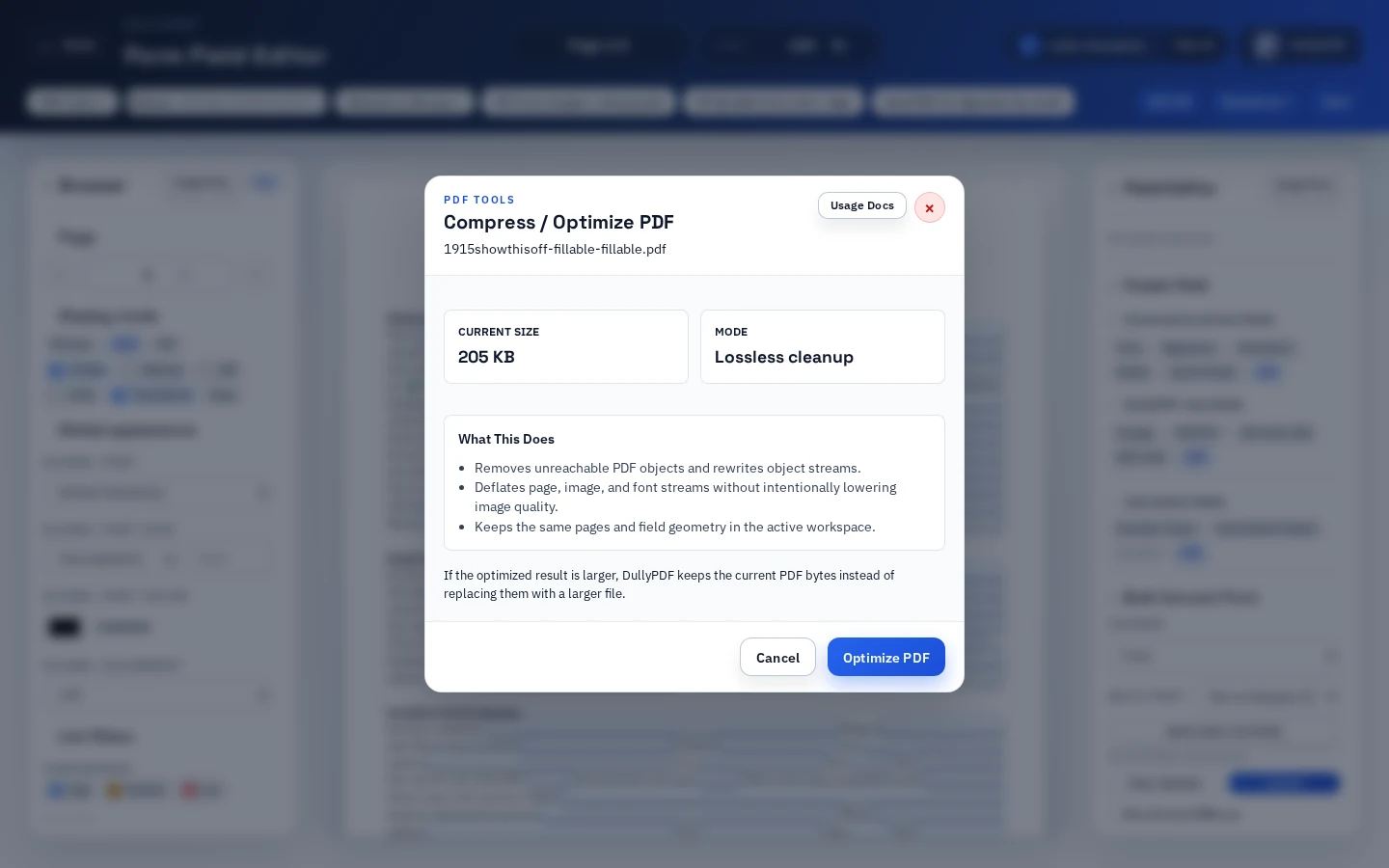
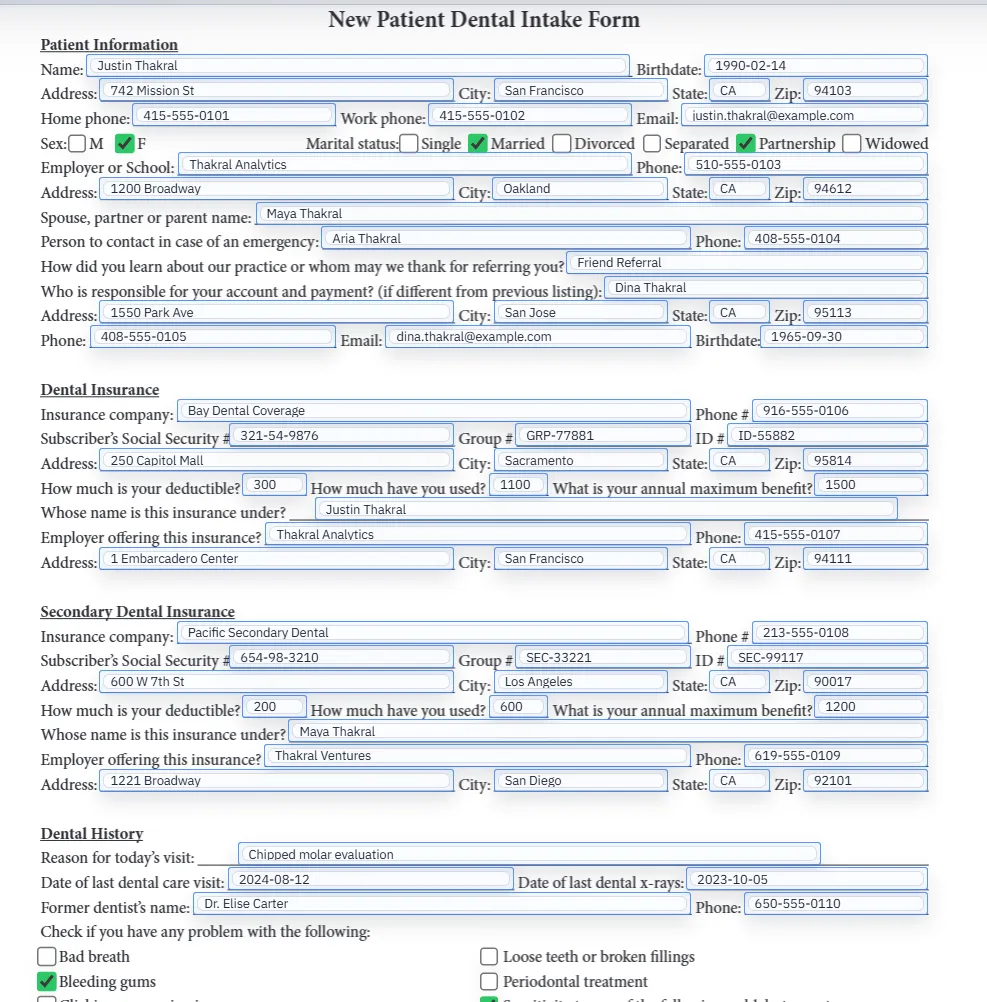
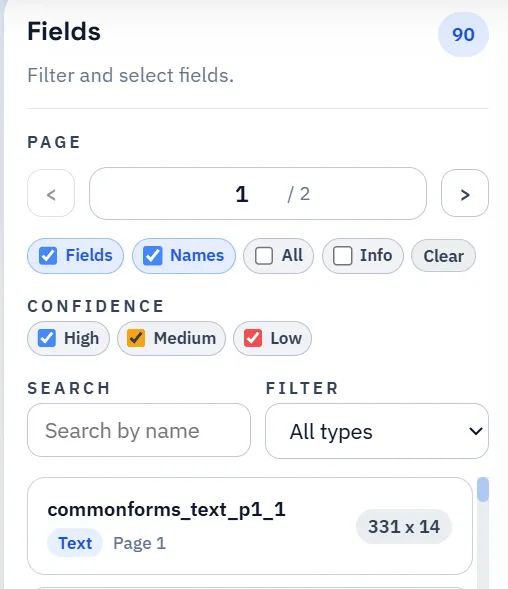
A normal PDF compression tool usually treats the file as a delivery asset. A fillable PDF template is more than that. It carries a page layout, live fields, DullyPDF metadata, mappings, signatures, barcode helpers, image helpers, calculation outputs, and saved workflow state that may feed links, API output, or repeated Search & Fill runs.
That is why compression should be positioned as a finishing pass, not a shortcut around template review. The useful goal is to clean up PDF bytes after the document has been reviewed, while keeping the same page and field model the operator already approved.
- Best fit: lossless cleanup after the template structure is stable and file size matters.
- Poor fit: trying to fix a bloated template before deleting obsolete pages or reviewing fields.