Commercial workflow page

PDF Inspection Score Calculations for Checklists and Audits

Create inspection and audit PDF templates with numeric score inputs, weighted sections, deductions, pass/fail thresholds, and final scores.

Workflow examples for Inspection Score Calculations

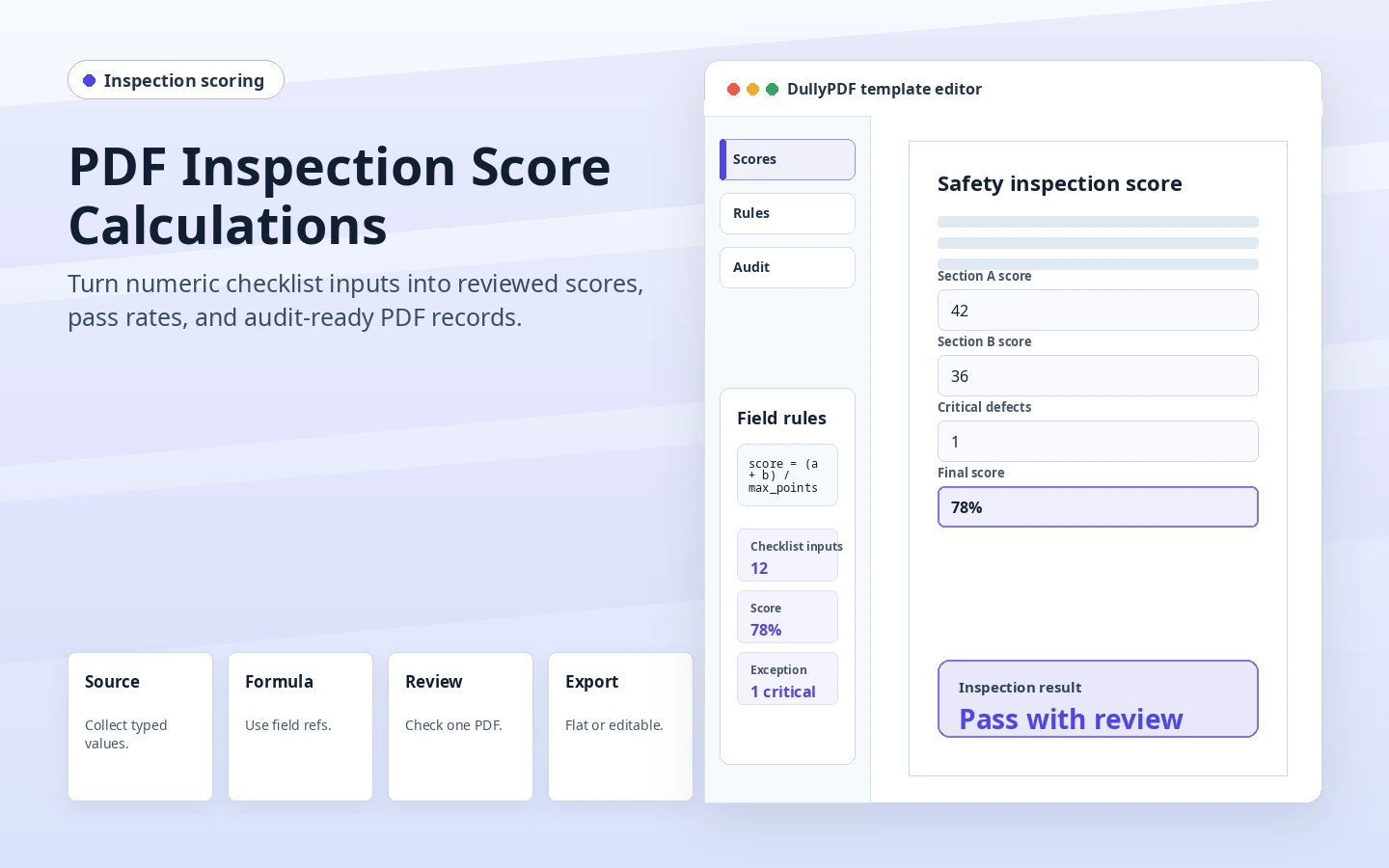
DullyPDF inspection score calculation preview showing checklist scores, critical defects, and final score output.
Inspection score PDFs should use explicit numeric score inputs and read-only calculated outputs.
Flat PDF output suitable for stable audit and inspection records.
Flat output preserves the reviewed score as page content for audit or recordkeeping use.

Inspection scoring works best with numeric source fields

A scoring PDF should use explicit numeric inputs for each scored section, deduction, or bonus. Those values can then feed read-only calculated outputs such as section total, final score, or adjusted score.

This is different from trying to calculate directly from arbitrary checkbox behavior. If checkboxes represent scores, convert that decision into numeric source fields or handle the complex logic before the PDF is generated.

Keep thresholds and policy clear

DullyPDF can compute numeric totals, but pass/fail policy, regulatory interpretation, and audit conclusions should stay in the organization’s review process. The PDF can display the score, deductions, and final result after source values are chosen.

That separation is important for safety and clarity. The template should not pretend to replace professional judgment or compliance review.

Good uses for calculated inspection PDFs

Good fits include safety checklists with numeric section scores, quality audits with deductions, property inspections with weighted categories, and program reviews where a final score must appear on a fixed PDF layout.

If the scoring logic requires loops, dynamic tables, conditional branching, or rules outside basic arithmetic, compute those values in the source system and use DullyPDF to place the final values into the PDF.

Validate the inspection score calculations workflow with one real record

A useful inspection score calculations test starts with one document your team already recognizes, not a perfect demo PDF. Open the existing file, review detection, rename ambiguous fields, confirm checkbox and radio behavior, and save the template only after the field list matches the way the document is used in practice.

Then fill one representative record end to end. Include long names, blank optional values, dates, yes/no choices, and any calculated or scannable fields the page depends on. That single controlled run exposes most template issues before they become repeated output problems.

Choose data and output paths for inspection score calculations

Search & Fill is the right first path when an operator should pick a record and inspect the result before export. It works with row data from CSV, XLSX, JSON, or stored respondent records. SQL and TXT files should be treated as schema-only mapping inputs; database-backed production workflows should query the database elsewhere and send JSON through API Fill.

Output mode matters too. Editable PDFs are useful when someone will continue working in live fields. Flat PDFs are safer when the completed record goes to customers, employees, agencies, signers, or archive systems because the visible values are baked into the page instead of depending on the recipient PDF viewer.

Production checklist for inspection score calculations

The inspection score calculations workflow is ready to reuse when a teammate can clear the document, rerun the same source record, and produce the same visible PDF without remembering hidden cleanup steps. If the result depends on one person knowing which field to fix manually, the template still needs review before it belongs in a repeat workflow.

  • The saved template uses stable field names and reviewed field types.
  • Source headers or API keys match the template schema without ambiguous duplicates.
  • Checkbox, radio, calculated, image, barcode, and signature fields have been tested if the workflow uses them.
  • At least one flat output and one editable output have been opened in the PDF viewers recipients are likely to use.

Why teams use Inspection Score Calculations

  • Calculate section scores, deductions, and final numeric totals from explicit score inputs.
  • Use Fill By Link for field inspections or Search & Fill for staff-entered score records.
  • Keep complex business rules outside the PDF when they exceed safe arithmetic formulas.

Implementation signals for Inspection Score Calculations

  • DullyPDF formulas can combine numeric fields and constants with basic arithmetic.
  • Scores can be materialized into flat PDFs for stable audit records.
  • The same template can be reused across respondents, spreadsheet rows, and API calls.

Need deeper technical details about inspection score calculations? Use the Rename + Mapping docs and Search & Fill docs to validate exact behavior.

Frequently asked questions about Inspection Score Calculations

Can DullyPDF calculate inspection scores?

Yes, when the score inputs are numeric fields and the formula fits DullyPDF’s safe arithmetic model.

Can DullyPDF calculate scores from checkboxes automatically?

Not as a general rule. Use numeric score inputs or compute complex checkbox scoring before filling the PDF.

Should final inspection records be flat PDFs?

Usually yes. Flat output preserves the computed score as page content for audit or recordkeeping use.

Docs for Inspection Score Calculations

Use these docs pages to verify the exact DullyPDF behavior behind inspection score calculations before you ship it as a repeat workflow.

Related routes for Inspection Score Calculations

These adjacent workflow pages cover nearby search intents teams compare while evaluating inspection score calculations.